
The Department for Education’s (DfE) White Paper, Every Child Achieving and Thriving, represents a generational shift, mandating that every secondary school provide an inclusion base to ensure pupils with SEND can remain within their mainstream communities.
However, as school leaders, we face a critical choice: do we approach this mandate with incrementalism or do we use Design Thinking to architect a system that solves the root causes of downstream failure?
Incremental change is like a mechanic repeatedly patching a leaky pipe. Design Thinking is the engineer who asks why the water pressure is failing and redesigns the entire system for resilience.
A Legacy of Foresight: Trusting Your Instincts
At Evolve, we have a history of looking at wider societal trends and adapting at pace, even when it challenges the mainstream school establishment. When PPA time was first introduced in 2005, there was significant pushback against PE and enrichment staff leading activities; today, such enrichment is recognised as a “common entitlement” for all.
Similarly, more than a decade ago, Evolve was advocating for an increase in dedicated pastoral staff—a role that has only recently been codified into the statutory framework – and is set to be extended through the mandate for Inclusion Bases and “Experts at Hand”.
We have learned that being brave enough to do what you think is right, rather than waiting for a solution to be handed down from elsewhere, is the only way to stay ahead of the curve.
Moving Beyond the “Isolation Room” Trap
Critics rightly fear that without a shift in pedagogical approach, new inclusion hubs risk becoming nothing more than isolation rooms that provide a “watered-down curriculum” rather than genuine integration. There is also skepticism about whether there is enough workforce capacity such as trained educational psychologists to actually deliver this ambitious new vision.
To avoid this, we should look at different solutions and consider alternate ways to achieve the desired goals.
Unseen Variables and Precise Support
In high-performance sectors like aerospace, success depends on monitoring “unseen” variables before they lead to system failure. NASA doesn’t wait for a mission to fail; they track every vital sign in real-time.
Mainstream education must do the same to plug the “transition leak.” Data from the FFT Education Datalab reveals that 10% of EHCP pupils leave the state-funded system entirely after Year 6, and 19% of SEN Support pupils “vanish” from records in Year 7, only for 30% to be re-identified later as challenges escalate.
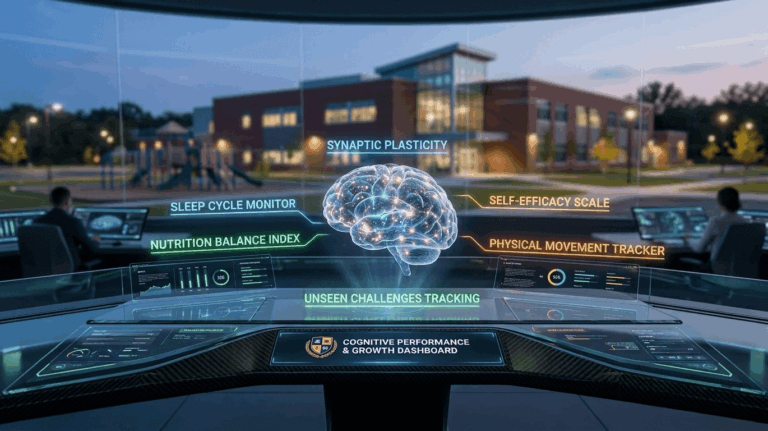
The Evolve Development Tracker (EDT) is a tool that addresses this challenge head-on. Instead of descriptive paperwork that merely catalogues activity, the EDT provides whole-child intelligence into vital signs such as sleep, nutrition, self-efficacy, and emotional wellbeing. This allows staff to see the unseen and intervene with support before system failure and aborted missions.
The Cognitive Blueprint
If we want to build a truly inclusive system, we must move beyond “cushioning” the effects of cognitive difficulties and start upregulating every brain’s ability to learn.
Evolve’s ENHANCE programme is already showing the way towards what an inclusive education system could look like. While incremental support models rely on high-cost human 1:1 support that often masks the problem, ENHANCE uses AI-powered neurocognitive training to drive physical and chemical changes in the brain reliably and at scale.
Drawing on the recent October 2025 INHANCE study, the software targets the brain’s neuromodulatory system to upregulate levels of acetylcholine, which is the primary neurotransmitter for attention, memory, and executive function. This gives pupils with ADHD or executive dysfunction the biological foundation that they need to thrive. This is not a bolt-on or futuristic intervention. It is a proven and inclusive way to redesign a child’s cognitive resilience that uses Design Thinking rather than “more of the same”.
Becoming an Inclusion Architect
The DfE White Paper aims to judge success by a reduction in pupils leaving state education and a more even distribution of SEND pupils across all schools. Ticking a compliance box by “renting a room” for an inclusion hub will not meet these metrics. Flooding the system with “Experts at Hand” will provide temporary reprieve but won’t stem the tide.
To meet the new National Inclusion Standards, Headteachers must become Inclusion Architects. By combining the precision identification tools with proven technology used in other sectors, we can ensure that high academic standards and inclusion really are integrated to become “two sides of the same coin”.
Real change starts with the bravery to trust your instincts, the ability to adapt at pace, and the leadership to take your team with you. Let’s stop fixing pipes and start redesigning systems.