
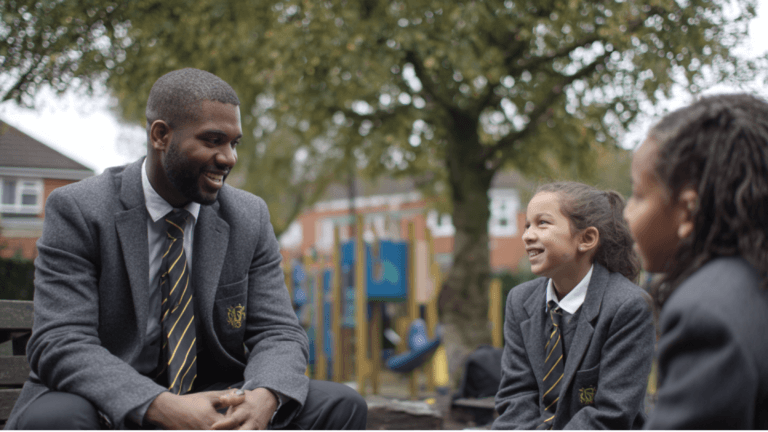
How do you turn school struggles into success stories? Term 1 data from the Wellbeing Compass reveals how dedicated Health Mentors, and a focus on belonging and inclusion, are already exceeding targets for mentees across numerous schools.
The interim data showcases the progress of Evolve’s award winning mentoring programme designed to support vulnerable pupils. For example, a partnership with one Virtual School saw 336 sessions delivered across six schools (three primary and three secondary) in Term 1, engaging mentees in over 3,000 mentoring questions and hundreds of “check-ins”.
The health mentoring programme operates on a Logic Model which posits that pupil performance—including attendance and achievement—is directly improved by first developing a pupil’s wellbeing and mindset.
A Proven Method for Success
Evolve’s approach is grounded in three key research-based practices:
- Relationship Quality: Prioritising trust so mentees feel safe discussing difficult topics.
- Long-Term Mentoring: Providing support over an entire academic year to ensure sustained benefits.
- Multiple Contact Points: Including lunch-time and after-school activities to ensure frequent, effective engagement.
Exceeding Expectations
Initial analysis of Term 1 data indicates that the programme is already hitting its ambitious goals. While the target was a 5% improvement in Combined Wellbeing by July 2026, the project has already achieved a 5.7% increase by the end of December 2025.
Specific areas of growth include:
- Physical Activity: A significant 12.9% improvement, rising from one of the lowest-ranked domains at the start of the term.
- Sleep: A 7.7% improvement, an achievement the report notes is typically a “difficult area to target”.
- Emotional Wellbeing: A 4.4% increase, aligning closely with the project’s core objectives.
Real-World Impact: Pupil Stories
Beyond the statistics, the report features several case studies demonstrating personal growth:
- Pupil A: Initially identified as unmotivated, Pupil A is now “actively contributing to class discussions” and applying herself in lessons.
- Pupil B: A Year 7 pupil who was “extremely quiet” at the start of term, Pupil B has since “really opened up” and shown a 27% improvement in Self-Efficacy.
- Pupil C: Despite early struggles with emotional regulation, Pupil C now uses positive affirmations and “greets [her mentor] with excitement” whenever they meet.
Staff and Pupil Feedback
Feedback from school communities is overwhelmingly positive. Common feedback includes praise for mentors who have built “strong, positive relationships” and programmes have already been “majorly beneficial.”
Looking Ahead
As the programme moves into Term 2, objectives move onto improvements in Classroom Climate and Pupil Performance. Bespoke surveys that look at each of these measures are completed by teachers in Terms 2 and 3 to track mentoring effectiveness and identify other emerging needs. Recent research has shown that targeting the most vulnerable pupils in classrooms can have a wider “Ripple Effect” on the whole school community, learning culture and academic progress.
This early evidence from the Evolve Development Tracker in academic year 2025/26 reinforces consistent historical findings that, when you prioritise the child’s wellbeing, learning behaviours and academic success will follow.